Bloody Hand: Strategic Typography for High-Impact Visual Communication
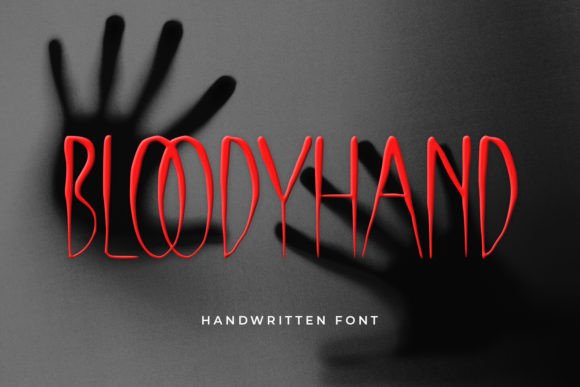
In the crowded landscape of digital and print media, typography is rarely just about legibility; it is a primary vehicle for emotional resonance and brand positioning. Bloody Hand, a creepy handwritten font, represents a specific strategic choice in visual communication. It is not merely a decorative element but a tool designed to evoke immediate psychological responses—fear, urgency, mystery, or raw authenticity. For entrepreneurs, marketers, and creators operating within niche markets, understanding how to deploy Bloody Hand effectively can differentiate a campaign from the noise of generic design.
This typeface is characterized by its irregular strokes, uneven baseline, and textured appearance that mimics the visceral quality of hand-painted or blood-smeared lettering. While its aesthetic is undeniably horror-themed, its utility extends beyond simple scare tactics. When integrated with clear intent, Bloody Hand serves branding, quotes, logos, t-shirt designs, tote bag designs, cards, banners, and social media content where disruption and memorability are key performance indicators.
Aligning Typeface Psychology with Brand Objectives
Before selecting Bloody Hand for any project, decision-makers must evaluate whether the font’s inherent personality aligns with their broader business goals. Typography carries semantic weight. A clean sans-serif suggests efficiency and modernity, while a serif implies tradition and authority. Bloody Hand, conversely, signals rebellion, danger, the supernatural, or intense passion. Using it without this alignment creates cognitive dissonance for the audience, potentially damaging trust rather than building it.
Consider a small business owner launching a line of artisanal hot sauces. The goal is to communicate heat, intensity, and a "dangerous" level of flavor. Here, Bloody Hand on the label does more than name the product; it visually promises an experience. It transforms a commodity into a narrative. Similarly, an escape room operator or a haunted attraction manager can use this font to establish immediate thematic consistency across banners, tickets, and social media teasers. In these contexts, the font is not an accessory; it is part of the core product experience.
However, the risk lies in misapplication. Applying Bloody Hand to a financial consulting firm’s quarterly report or a children’s educational blog would be a strategic error. The disconnect between the visual tone and the service offering undermines credibility. Therefore, the first step in utilizing this asset is a rigorous audit of your brand’s voice. If your brand values include edginess, boldness, or theatricality, Bloody Hand becomes a viable asset. If your values center on stability, calm, or corporate professionalism, it should be avoided entirely.
Practical Applications Across Media Channels
The versatility of Bloody Hand allows it to function across various mediums, but each requires a tailored approach to maximize impact and maintain readability.
Digital Marketing and Social Media
In social media feeds, users scroll rapidly, making split-second decisions about what captures their attention. Bloody Hand excels here due to its high visual contrast against standard digital interfaces. For Halloween campaigns, thriller movie promotions, or limited-time "flash sales" with an urgent tone, this font can stop the scroll.
When designing social media graphics, use Bloody Hand sparingly. Reserve it for headlines or key call-to-action phrases rather than body text. For instance, a banner announcing a "Midnight Sale" benefits from the font’s eerie allure, but the terms and conditions should remain in a neutral, readable typeface. This hierarchy ensures that the emotional hook is delivered without sacrificing clarity or accessibility.
Merchandise and Physical Products
For creators involved in e-commerce, particularly in the apparel and accessories sector, Bloody Hand offers significant commercial potential. T-shirt designs and tote bag designs thrive on statement pieces. Consumers often purchase apparel that reflects their subcultural identity or sense of humor. A tote bag featuring a witty, dark-humored quote in Bloody Hand appeals to a demographic that values alternative aesthetics.
When preparing files for print-on-demand services or screen printing, ensure the vector quality of the font is maintained. The textured nature of Bloody Hand can sometimes result in ink bleed if not properly adjusted for the printing method. Test prints are essential to verify that the "creepy" effect remains sharp and intentional, rather than appearing as a printing error. This attention to operational detail protects brand reputation and reduces return rates.
Event Branding and Environmental Graphics
Banners, posters, and event signage benefit from the immersive quality of Bloody Hand. Whether for a music festival’s heavy metal stage, a theater production of a gothic classic, or a pop-up horror experience, the font helps set the physical atmosphere. Large-format printing allows the texture of the handwriting to become a tactile visual element. Designers should consider pairing Bloody Hand with high-contrast backgrounds—such as deep blacks, stark whites, or saturated reds—to enhance legibility from a distance.
Strategic Risks and Mitigation
While Bloody Hand is powerful, it carries inherent risks if used without strategic guardrails. The primary concern is readability. Handwritten fonts, especially those with distressed or irregular features, can be difficult to decipher at small sizes or low resolutions. Poor readability leads to user frustration and message loss.
To mitigate this, adhere to the principle of hierarchical typography. Use Bloody Hand exclusively for short, impactful phrases. Never use it for paragraphs or detailed instructions. Pair it with a highly legible sans-serif font for supporting text. This combination balances emotional impact with functional clarity. For example, a logo might feature Bloody Hand for the brand name, while the tagline below uses a clean, geometric font to ensure immediate comprehension.
Another risk is audience fatigue. Horror and shock aesthetics can become gimmicky if overused. If every piece of communication screams for attention, nothing stands out. Strategic restraint is crucial. Deploy Bloody Hand during specific campaigns or for specific product lines rather than as a default brand font. This preserves its novelty and impact, ensuring it remains a special tool rather than background noise.
Enhancing Creativity Through Constraints
For educators and creative professionals, Bloody Hand can serve as a teaching tool for understanding tone and audience. Assigning projects that require students to rebrand a harmless product using a horror-themed font forces them to confront the power of visual semiotics. It encourages critical thinking about how design choices influence perception and consumer behavior.
Freelancers and designers can also use Bloody Hand to expand their portfolio diversity. Demonstrating the ability to handle niche, thematic typography shows versatility to potential clients. It proves that the designer understands not just aesthetics, but the contextual application of design elements. Including case studies where Bloody Hand was used to solve a specific branding problem—such as increasing engagement for a horror podcast—adds tangible value to a professional portfolio.
Long-Term Value and Brand Consistency
Integrating Bloody Hand into a brand’s visual identity requires long-term planning. If adopted as part of a seasonal campaign, ensure that the transition back to standard branding is smooth. If used for a sub-brand or a specific product line, maintain consistency across all touchpoints. Inconsistency dilutes brand recognition. Whether on a business card, a website header, or packaging, the application of Bloody Hand should feel deliberate and cohesive.
Furthermore, consider the longevity of trends. While horror aesthetics have enduring appeal in certain subcultures, they may fluctuate in mainstream popularity. Building a brand solely around a trendy font like Bloody Hand can be risky. Instead, use it as a complementary element within a broader, more stable visual system. This approach ensures that the brand remains relevant even if the specific aesthetic trend evolves.
Ultimately, Bloody Hand is more than a creepy handwritten font; it is a strategic instrument for targeted communication. By understanding its psychological impact, respecting its limitations, and applying it with precision, creators and businesses can achieve distinctive results. Whether enhancing a t-shirt design, crafting a memorable logo, or driving engagement on social media, the thoughtful use of this font supports clearer positioning and stronger emotional connections with the intended audience. Success lies not in the font itself, but in the wisdom of its application.